I have always been drawn to sunflowers. I wasn't born in Kansas, but from a young age my mom taught me about the state and its history. Since sunflowers are the Kansas state flower, they have become a familiar and beloved part of the place where I've lived for most of my life.
One of the things I find most fascinating about sunflowers is that, while they are growing, they track the sun—a behavior called heliotropism. Throughout the day, the flower bud and upper stem move from east to west, following the sun across the sky. At night, they slowly turn back to face east before sunrise. This movement happens because the stem grows slightly faster on the side away from the sun, causing it to bend toward the light. It's directed by the plant's internal circadian clock and plant hormones.
What I find especially interesting is that mature sunflowers eventually stop tracking the sun. Once the flower fully opens and the stem hardens, it typically remains facing east instead of continuing to follow the sun throughout the day.
Yesterday in church, our pastor shared a story about his son, whom he described as being "obsessed with the moon." He explained something I had never really stopped to consider. The moon is one of the brightest objects in the night sky, yet it produces no light of its own. Unlike the sun, it isn't a star and doesn't generate light. The light we see is simply sunlight reflected from its surface. Without the sun, the moon would be invisible to us. As the pastor said, it reflects the glory of something much greater than itself.
The sun also plays an important role in our own lives. Even in the heat and humidity of a Midwest July, we need the sun. It helps our bodies produce serotonin, which supports our mood and emotional well-being. It regulates our internal body clock, improving sleep quality, increasing daytime alertness, and reducing fatigue. It also enables our bodies to produce vitamin D, which is essential for overall health.
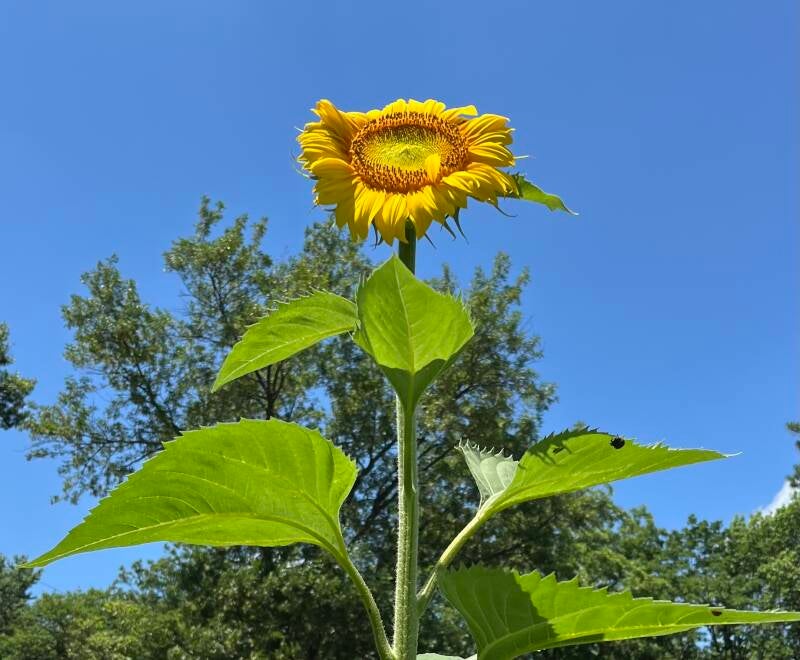
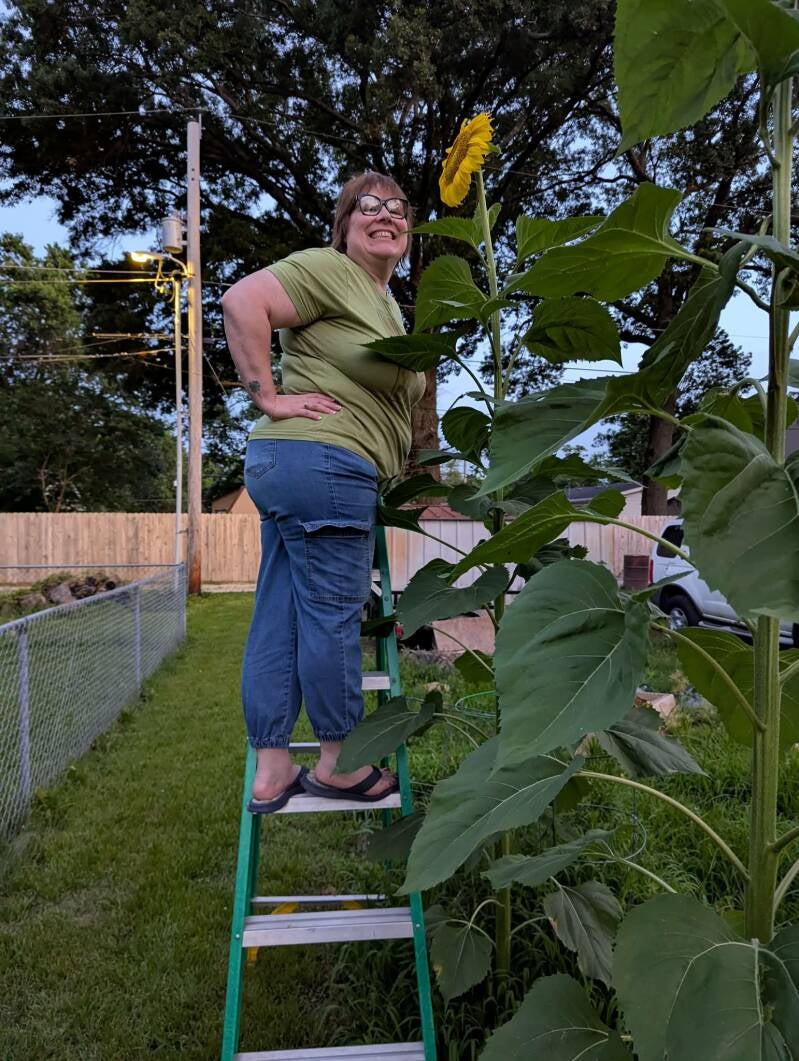
As I sat reflecting on the beautiful sunflowers growing in my yard, these thoughts began to come together. What started as an appreciation for God's creation slowly became something much deeper.
Without the sun, the world would grow cold and dark. My sunflowers wouldn't grow, and the moon wouldn't shine. But as I continued to think about it, I realized my focus had been on the wrong Sun all along. This blog wasn't really about the sun in the sky—it was about a different Son.
As a Christian woman continuing to navigate this season of my faith, I'm reminded that we are called to reflect the light of Christ. Jesus tells us in Matthew 5:14–16, "You are the light of the world... let your light shine before others."
When I was younger in my faith, I was a lot like a growing sunflower—constantly turning toward the Son, seeking His direction through every joy, challenge, and uncertainty. But sometimes I wonder if, as I've matured, I've become a little like the mature sunflower. I know the stories. I know God's faithfulness. I've experienced His guidance over the years. Because of that familiarity, it's easy to believe I can simply keep going without intentionally turning toward Him as often.
The truth is, there is always more growing to do.
No matter how long I have walked with Christ, I still need the Son every single day. I still need His wisdom, His grace, His correction, and His presence. Spiritual maturity isn't about needing Him less; it's about recognizing how deeply I still depend on Him.
I'm grateful for the reminder I received yesterday—in both my garden and my church. Reflecting Christ's light is not something we outgrow. Without the Son, our hearts remain in spiritual darkness. Just as the moon shines by reflecting the sun's light, we are called to reflect the love, grace, and glory of Christ. The more we intentionally turn toward the Son, the more His light shines through us.

Create Your Own Website With Webador